
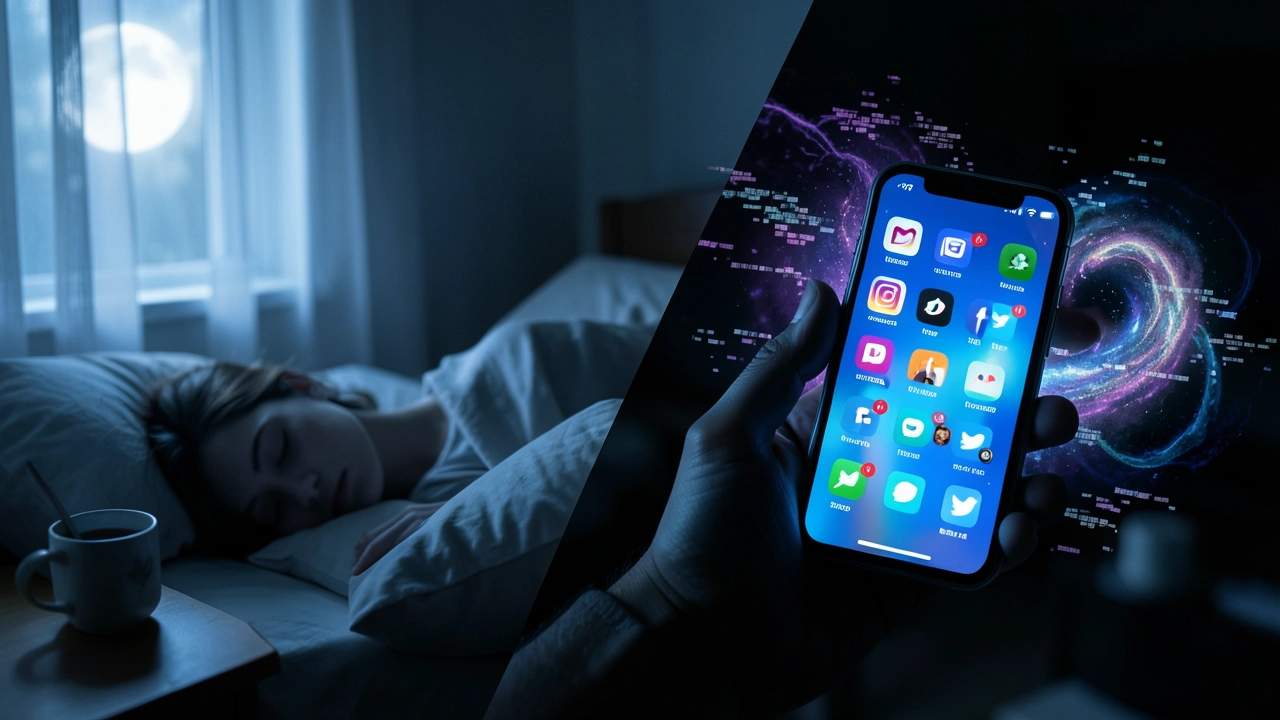
It’s easy to wonder how social media affects sleep quality, especially when you’re just starting to think about it. So many things are happening online all the time! It can feel a bit tricky to figure out where to begin.
But don’t worry! We’ll walk through this together, step by simple step. Get ready to learn how to sleep better and feel more rested.
We’ll cover what you need to know to make your nights more peaceful.
The Impact of Social Media on Sleep Patterns
This section will explore the main ways social media can mess with your sleep. We’ll look at why scrolling before bed can be a problem and what happens to your brain when you do it. You’ll get a clear picture of the connection between your phone screen and your pillow.
This part sets the stage for understanding why better sleep habits are important.
Blue Light and Sleep Disruption
Have you ever noticed how screens from phones, tablets, and computers seem to glow? That glow comes from something called blue light. This blue light is a big deal when it comes to sleep.
It’s a type of light that has a lot of energy. When this light hits your eyes, it tells your brain it’s daytime. Your brain then stops making melatonin.
Melatonin is a hormone that helps you feel sleepy and ready for bed. So, when you’re looking at your phone right before you sleep, the blue light tricks your brain into thinking it’s still light out.
This can make it harder to fall asleep. Even if you do manage to drift off, the blue light can make your sleep less deep and restful. Think of it like trying to sleep when the sun is still shining brightly.
It’s just not as easy to get good quality rest. This is a key reason how social media affects sleep quality is such a hot topic.
The effect isn’t just about feeling more awake. It can also mess with your body’s natural sleep-wake cycle, called your circadian rhythm. This is your body’s internal clock.
When this clock gets out of sync, you might feel tired during the day and wired at night. It’s like your body doesn’t know when to rest anymore.
What is Melatonin?
Melatonin is a natural hormone that your body makes. Its main job is to help you sleep. Your brain, specifically a small gland called the pineal gland, produces melatonin.
Production usually starts when it gets dark outside. This signals to your body that it’s time to wind down. Think of melatonin as a signal that tells your body, “It’s bedtime.”
The amount of melatonin in your body changes throughout the day and night. It’s usually low during the day and rises in the evening. This rise in melatonin is what makes you feel drowsy.
It helps you fall asleep faster and stay asleep. It also plays a role in regulating your body’s 24-hour cycle, which is your sleep-wake rhythm.
Factors like light exposure can affect melatonin production. Bright lights, especially the blue light from electronic devices, can suppress melatonin. This means your body makes less of it, making it harder to fall asleep.
This is why doctors and sleep experts often advise avoiding screens before bed.
What is Circadian Rhythm?
Your circadian rhythm is like your body’s internal master clock. It’s a natural, 24-hour cycle that controls when you feel sleepy and when you feel awake. This clock is influenced by light and darkness.
It helps your body know when to do important things like sleep, eat, and even when to release certain hormones.
When your circadian rhythm is working well, you feel alert during the day and tired at night. This helps you get the restorative sleep you need. However, this rhythm can be easily disrupted.
Things like shift work, long-distance travel across time zones (jet lag), and even using electronic devices late at night can throw it off balance.
When your circadian rhythm is out of sync, you might experience sleep problems. You could have trouble falling asleep, staying asleep, or waking up feeling groggy. It can also affect your mood, energy levels, and overall health.
Keeping your circadian rhythm on track is very important for good sleep and well-being.
The Psychological Impact of Social Media
Beyond the blue light, social media can also affect your sleep in other ways. Scrolling through feeds can make your mind race. You might see things that make you happy, sad, or even stressed.
This mental stimulation can keep your brain busy when it should be winding down. It’s hard to relax and get sleepy when your mind is buzzing with thoughts and emotions from what you just saw online.
The constant need to check for updates can also create a sense of urgency. You might feel like you’re missing out if you don’t stay connected. This “fear of missing out,” or FOMO, can lead to anxiety.
This anxiety makes it even harder to fall asleep. It’s like your brain is always on alert, waiting for the next notification.
This psychological toll is a major part of how social media affects sleep quality. It shows that it’s not just about the physical light; it’s also about what’s going on in our heads. Learning to manage these feelings is a key step in improving sleep.
Fear of Missing Out (FOMO)
FOMO is a feeling you get when you think others are having more fun or experiencing better things than you are. It’s like you’re on the outside looking in, and you’re missing out on something important. Social media is a big reason why people feel FOMO so often these days.
When you see friends or other people posting about exciting events, vacations, or fun times, it’s easy to feel a pang of jealousy or sadness. You might start thinking, “Why wasn’t I invited?” or “I wish I was there!” This feeling can make you want to check your phone even more, to see what else you might be missing.
This constant worry about missing out can make you feel stressed and anxious. This is the opposite of what you need to relax and fall asleep. The more you worry about missing out, the harder it becomes to unwind and get the rest your body needs.
It creates a cycle where you use social media, feel FOMO, and then have trouble sleeping.
The Dopamine Loop
Social media uses something called a dopamine loop to keep you coming back. Dopamine is a chemical in your brain that makes you feel good. When you get a like, a comment, or a new follower, your brain releases a little bit of dopamine.
This makes you feel happy and satisfied, even if only for a moment.
This creates a cycle. You post something, you get a reward (like a notification), you feel good, and you want more. So, you check your phone again, hoping for another reward.
This keeps you hooked and wanting to engage with the app. It’s like a slot machine, where you keep pulling the lever hoping for a big win.
This constant seeking of small rewards can make it hard to switch off. Your brain gets used to these little dopamine hits. When it’s time to sleep, your brain might still be seeking that next hit.
This makes it difficult to relax and let go of the urge to check your phone, directly impacting your ability to fall asleep.
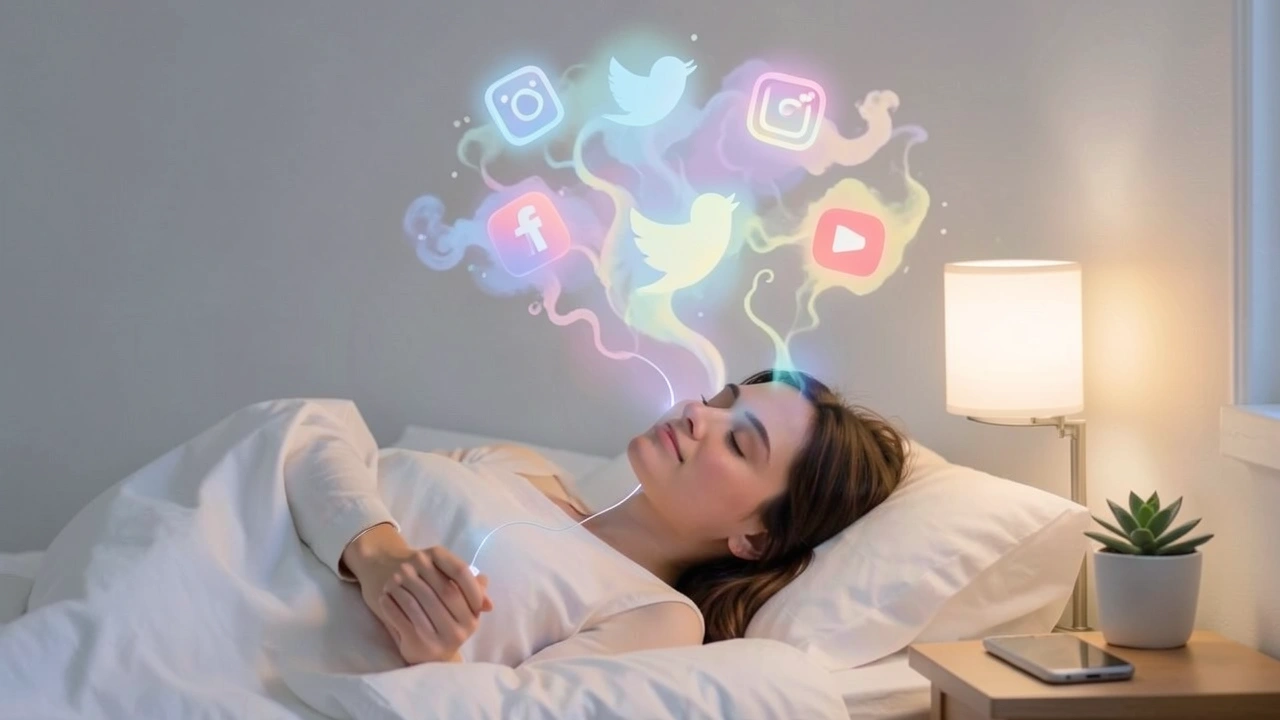
Practical Steps to Improve Sleep with Social Media Use
Now that we know why social media can be a problem for sleep, let’s look at what you can actually do about it. This section is all about putting knowledge into action. We’ll talk about simple habits you can build to help you sleep better, even if you use social media.
These are easy changes that can make a big difference.
Setting Healthy Boundaries
One of the most effective ways to manage social media’s impact on sleep is by setting boundaries. This means deciding when and for how long you’ll use social media. It’s about taking control back from your apps.
Without clear limits, it’s easy to get lost scrolling for hours.
A good starting point is to create a “digital curfew.” This means you stop using social media a certain amount of time before you plan to go to sleep. For many people, one hour before bed is a good goal. This gives your brain and body time to wind down.
It helps your brain stop thinking about what you saw online.
It’s also helpful to designate “tech-free” zones or times. For example, you could decide that the bedroom is a no-phone zone. Or, you might choose to avoid social media during meals.
These boundaries help create a clearer separation between your online life and your personal time, especially your rest time. This is a crucial part of understanding how social media affects sleep quality.
Creating a Digital Curfew
A digital curfew is simply a rule you set for yourself about when you’ll stop using your phone or other devices for social media. Think of it like a bedtime for your apps. Most experts suggest setting this curfew at least an hour before you want to fall asleep.
Some people even find that two hours is better.
The goal of a digital curfew is to give your brain a break. It’s about reducing the exposure to blue light and the mental stimulation that social media can cause. When you turn off your devices, you allow your body to start producing melatonin.
This hormone signals to your brain that it’s time to get ready for sleep.
Sticking to a digital curfew might be hard at first. You might feel the urge to check your phone one last time. But with practice, it becomes easier.
You can set reminders on your phone to help you remember. Or, you can tell a friend or family member about your curfew to help you stay accountable.
Tech-Free Zones
Designating tech-free zones in your home can also be very helpful for sleep. The most important tech-free zone for sleep is usually the bedroom. When your phone is not in your bedroom, you’re less likely to be tempted to scroll through social media when you should be sleeping.
This also helps your brain associate your bedroom with sleep and relaxation, not with phone notifications or endless scrolling. If your phone is in the bedroom, you might keep it on your nightstand. This makes it easy to grab when you wake up in the middle of the night or when your alarm goes off.
Taking it out of the bedroom removes this temptation.
Other tech-free zones can include the dinner table. This encourages more face-to-face interaction during meals. You can also create tech-free times, like the first hour after you wake up or during family activities.
These boundaries help you be more present in your offline life and protect your sleep time.
Mindful Social Media Consumption
It’s not just about when you use social media, but also how you use it. Mindful consumption means being more aware of your feelings and intentions when you’re online. It’s about using social media in a way that doesn’t negatively affect your mood or your sleep.
This can involve being more selective about who you follow and what content you engage with. If certain accounts or topics consistently make you feel anxious or upset, consider unfollowing them. Curating your feed to include positive and calming content can make a big difference.
It’s about making your online space a more peaceful place.
Being mindful also means paying attention to how much time you’re spending on social media. Many phones have built-in tools that can track your usage. Use these tools to see where your time is going.
Then, you can make conscious choices to reduce your usage if needed. This is a key strategy for managing how social media affects sleep quality.
Curating Your Feed
Think of your social media feed like your personal online environment. You have the power to decide what you let into that environment. Curating your feed means actively choosing the content and accounts you want to see.
This is more than just passively scrolling; it’s about making intentional choices.
If you find that certain posts or accounts make you feel stressed, anxious, or inadequate, it’s time to make a change. You can unfollow those accounts. You can also mute them if you don’t want to completely unfollow but still want to see less of their content.
Conversely, seek out accounts that share positive, inspiring, or relaxing content.
This practice can help create a more positive and less stimulating online experience. When your feed is filled with things that uplift you rather than stress you out, it’s easier to disconnect without feeling a sense of loss. A well-curated feed can actually be a source of calm, not a trigger for worry.
Setting Time Limits
Most smartphones today come with features that help you monitor and limit your app usage. These tools can be incredibly helpful for managing social media consumption. You can set daily time limits for specific apps, including social media platforms.
Once you reach your set limit, the app will often be blocked for the rest of the day. This feature acts as a gentle reminder and a hard stop, preventing you from endlessly scrolling. It forces you to be more aware of how much time you’re spending online.
This awareness is the first step toward making changes.
Using these built-in features can be a very practical way to regain control over your screen time. It takes the guesswork out of it and provides clear boundaries. By setting these limits, you’re actively choosing to protect your time, especially your sleep time.
Creating a Relaxing Bedtime Routine
Once you’ve finished with social media, it’s important to have something calming to do before bed. A good bedtime routine signals to your body that it’s time to wind down and prepare for sleep. This routine should be relaxing and screen-free.
Think about activities that help you feel peaceful and comfortable. This could be reading a book, taking a warm bath, gentle stretching, or listening to calming music. The key is to choose activities that you find genuinely relaxing and that don’t involve bright screens or stimulating content.
Consistency is also important; doing the same routine each night helps reinforce the sleep signal.
A solid bedtime routine helps counteract the stimulating effects of social media and blue light. It builds a buffer between your active day and your much-needed rest. This makes it easier to transition into sleep and improves overall sleep quality.
This is the practical side of addressing how social media affects sleep quality.
Screen-Free Activities
After you’ve put away your phone, it’s essential to fill that time with activities that promote relaxation. These screen-free activities help your mind and body prepare for sleep. They provide a gentle transition away from the day’s demands.
Reading a physical book is a classic example. The tactile experience of turning pages and the absence of blue light can be very soothing. Another good option is listening to a podcast or audiobook at a low volume.
This can help quiet your thoughts without requiring visual focus.
Engaging in gentle stretching or light yoga can also release physical tension. Deep breathing exercises or meditation are excellent for calming the mind. Even simple activities like journaling your thoughts or doing a crossword puzzle can help shift your focus away from worries and towards relaxation.
The goal is to find what works best for you to feel peaceful.
The Benefits of a Warm Bath
Taking a warm bath before bed is a time-tested method for promoting relaxation and improving sleep. The warmth of the water has a direct effect on your body. It helps to relax your muscles and ease any tension you might be holding.
Beyond the muscle relaxation, the temperature change plays a key role. When you get out of a warm bath, your body temperature starts to drop. This drop in body temperature is a natural signal to your brain that it’s time to sleep.
It mimics the natural drop in body temperature that happens as part of your circadian rhythm.
Adding Epsom salts or calming essential oils like lavender can enhance the relaxing effects. This ritual creates a peaceful transition from the day’s activities to sleep. It offers a moment of quiet self-care that is truly beneficial for sleep preparation.
Statistics and Scientific Insights
To really grasp how social media affects sleep quality, it’s helpful to look at some numbers and what scientists have found. These insights show that the issues we’ve discussed aren’t just personal feelings; they are backed by research. Understanding these facts can motivate us to make real changes.
Studies have consistently shown a link between heavy social media use and poorer sleep. This includes taking longer to fall asleep, sleeping for shorter periods, and feeling less rested. The reasons are exactly what we’ve been exploring: the blue light from screens, the mental stimulation, and the anxiety that can come with online interactions.
For example, a 2019 study published in the journal Sleep Medicine found that individuals who used social media for more than two hours per day were more likely to experience sleep disturbances. This highlights that the amount of time spent online is a significant factor.
Research on Blue Light and Sleep
Scientific research has extensively studied the impact of blue light on our sleep. Studies have used controlled experiments to show how exposure to blue light at night can affect melatonin levels and sleep patterns. For instance, research has demonstrated that using electronic devices with screens that emit blue light in the two hours before bedtime can delay sleep onset.
This is because blue light is particularly effective at suppressing melatonin production. Melatonin is the hormone that signals to your brain that it’s time to sleep. When blue light interferes with this signal, your brain thinks it’s still daytime, making it harder to fall asleep.
It also can reduce the amount of time spent in deep sleep, which is crucial for feeling rested.
The intensity and duration of exposure matter. The closer you are to the screen and the longer you look at it, the greater the effect. This is why turning off devices or using features that reduce blue light, like night mode or blue light filters, can be helpful for improving sleep.
The impact of blue light is a core scientific explanation for how social media affects sleep quality.
Melatonin Suppression Studies
Numerous scientific studies have focused on how artificial light, especially blue light, affects melatonin. These studies often involve measuring melatonin levels in participants after they have been exposed to different types of light for a specific period. The results are quite consistent: blue light is the most potent suppressor of melatonin.
One classic study found that even moderate exposure to blue light from a tablet for just two hours before bedtime could significantly reduce melatonin levels. This reduction can be substantial, delaying your body’s natural cue to fall asleep. It’s like dimming the lights too late in the evening.
Researchers have also looked at different wavelengths of light. They found that shorter wavelengths, which correspond to blue light, have the strongest effect on the cells in our eyes that regulate sleep. This is why many devices now offer “night mode” settings that shift the screen’s color towards warmer tones, reducing the blue light output.
The Link Between Screen Time and Sleep Deprivation
There’s a clear correlation between the amount of time people spend on screens, especially for social media, and the likelihood of experiencing sleep deprivation. When hours that should be dedicated to rest are instead spent scrolling, watching videos, or engaging in online conversations, sleep suffers.
This isn’t just about feeling tired. Chronic sleep deprivation can have serious health consequences. It can affect your mood, concentration, immune system, and even your long-term health.
It creates a cycle where you feel too tired to engage in healthy activities, which might lead you to spend even more time on screens, further worsening sleep.
A report by the National Sleep Foundation indicates that a significant portion of the population, particularly young adults and adolescents, does not get enough sleep. They often cite screen use, including social media, as a primary contributing factor. This connection is a major part of understanding how social media affects sleep quality.
Statistics on Teen Sleep and Social Media
Studies focusing on teenagers often reveal a strong link between their social media habits and their sleep patterns. For instance, research has shown that teenagers who spend more time on social media tend to get less sleep and have poorer sleep quality.
One statistic suggests that teens who use social media in the hour before bed are more likely to report poor sleep quality, insufficient sleep, and daytime sleepiness. This is a critical age for development, and sleep plays a vital role in it. The constant connectivity and engaging nature of social media can be particularly detrimental to adolescent sleep schedules.
The pressure to stay connected and the fear of missing out are often cited as reasons why teens engage with social media late into the night, even when they know it affects their sleep. This highlights the challenge of setting boundaries in this age group.
Impact on Adults
While teens are often a focus, adults are also significantly impacted by social media use on their sleep. Many adults find themselves scrolling through feeds late into the evening, whether for relaxation, to catch up on news, or simply out of habit. This can lead to similar sleep problems as seen in younger populations.
Studies have indicated that adults who report higher levels of social media engagement, particularly before bed, are more likely to experience difficulties falling asleep, more frequent awakenings during the night, and a general feeling of being less rested.
The effects can extend beyond just the immediate night. Chronic disruption to sleep patterns due to social media use can contribute to daytime fatigue, reduced productivity, and an increased risk of mental health issues like anxiety and depression. This underscores that managing social media habits is important for all age groups seeking better sleep.
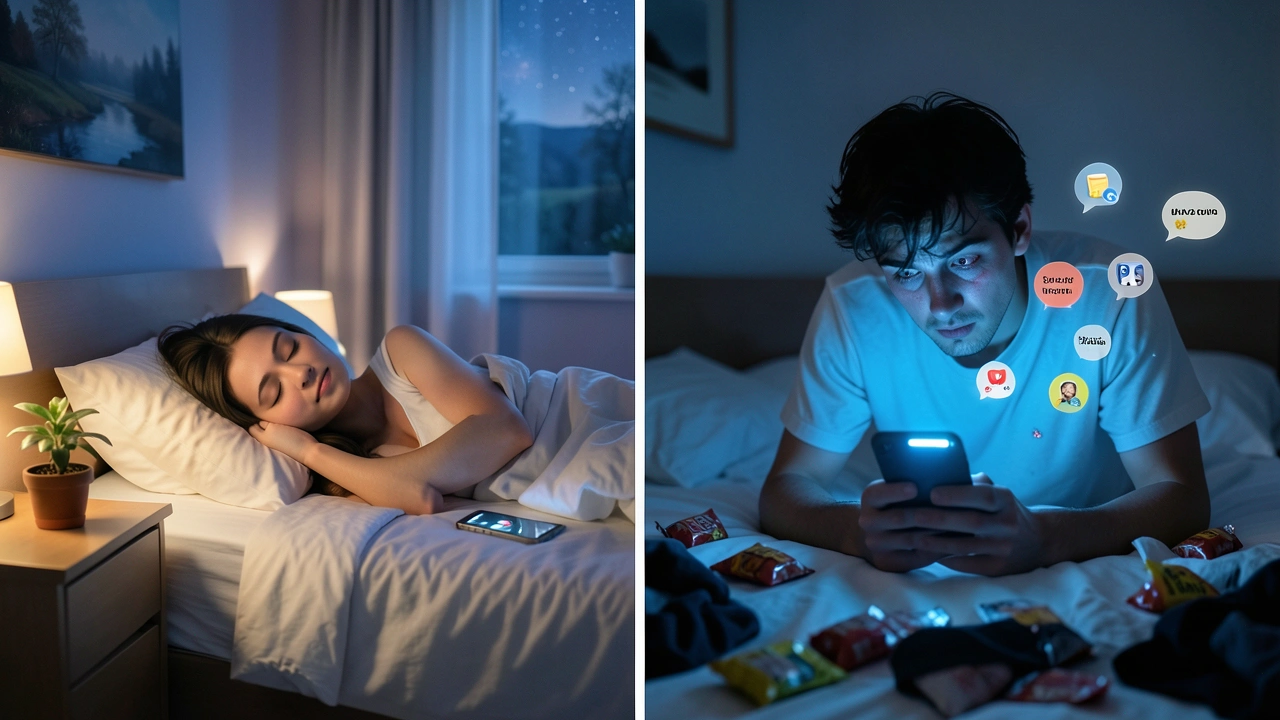
Comparing Healthy vs. Unhealthy Social Media Habits for Sleep
To truly tackle how social media affects sleep quality, it’s useful to compare what good habits look like versus what usually causes problems. Seeing the contrast can make it clearer what to aim for and what to avoid. This section breaks down the differences so you can see a path forward.
Unhealthy habits often involve constant, mindless scrolling, especially close to bedtime. This leads to blue light exposure, mental stimulation, and difficulty winding down. On the other hand, healthy habits involve intentional use, setting limits, and creating a peaceful environment before sleep.
By understanding these differences, you can start to identify areas where you might need to make changes. It’s about making your social media use work for you, not against your sleep.
Unhealthy Social Media Habits
Unhealthy social media habits are those that consistently disrupt sleep and well-being. These are the patterns that many people fall into without realizing the full extent of their impact. They often involve a lack of control and a passive engagement with the digital world.
One major unhealthy habit is using social media right up until the moment you try to fall asleep. This includes scrolling through feeds, watching videos, or replying to messages in bed. The blue light emitted from the screen and the mental engagement keep your brain active.
Another unhealthy habit is checking social media compulsively throughout the day and night. This can be driven by FOMO or a need for constant validation through likes and comments. This constant engagement prevents your mind from fully relaxing, even when you’re not actively using your phone.
Mindless Scrolling
Mindless scrolling is when you scroll through social media feeds without a specific purpose. You’re not looking for anything in particular; you’re just moving from one post to the next. This often happens when you’re bored or trying to avoid other tasks.
This habit is particularly problematic because it can consume a lot of time without providing much value. It can also expose you to a wide range of content, some of which might be upsetting or anxiety-inducing. Your brain is constantly processing new information without a clear endpoint.
The act of scrolling itself can be somewhat hypnotic, making it hard to stop. This is how minutes can easily turn into hours. When this happens close to bedtime, it directly interferes with your body’s preparation for sleep, as your brain remains stimulated.
Late-Night Engagement
Late-night engagement with social media refers to using platforms in the hours leading up to bedtime, or even after you’ve gone to bed. This can include checking notifications, responding to messages, or browsing new content.
The primary issue here is the disruption of your natural sleep-wake cycle. As discussed, the blue light from screens suppresses melatonin. Late-night use means you’re actively fighting against your body’s natural inclination to wind down and become drowsy.
Furthermore, the content you see late at night can be more impactful. You might see news that upsets you or engage in conversations that are emotionally charged. This mental and emotional arousal makes it incredibly difficult for your mind to switch off and achieve the deep relaxation needed for quality sleep.
Healthy Social Media Habits
Healthy social media habits are those that allow you to enjoy the benefits of connection without sacrificing your sleep. They involve intentionality, moderation, and setting clear boundaries. These habits empower you to control your digital life rather than letting it control you.
A key healthy habit is establishing a digital curfew. This means defining a specific time each evening when you will stop using social media and other electronic devices. This allows your brain to start its natural wind-down process.
It helps to create a clear separation between your day’s activities and your time for rest.
Another healthy habit is to be mindful of your consumption. This means choosing what you engage with, unfollowing accounts that cause stress, and focusing on content that is positive or informative. It’s about curating a feed that contributes to your well-being, not detracts from it.
This approach helps manage how social media affects sleep quality.
Intentional Use
Intentional use of social media means approaching it with a purpose, rather than just letting it happen to you. Before you open an app, ask yourself why you’re doing it. Are you looking for specific information?
Are you checking in with a friend? Or are you just opening it out of habit?
When you use social media intentionally, you’re more likely to stay focused on your task and avoid getting sidetracked. This helps you use your time more efficiently and avoid excessive scrolling. It also gives you a sense of control over your online interactions.
For example, instead of opening Instagram to “see what’s new,” you might intentionally open it to view photos shared by a specific friend or family member. Once you’ve seen what you were looking for, you close the app. This focused approach prevents the mindless time-sink that can often occur.
Using Blue Light Filters
Many devices now come with built-in features to reduce the amount of blue light emitted from the screen. These are often called “night mode,” “night shift,” or “eye comfort shield.” Using these filters can significantly reduce the disruptive effect of screen light on your sleep.
These filters work by shifting the color temperature of your screen towards warmer tones, like orange or red. This mimics the natural dimming light of sunset. By doing so, they help your brain to continue producing melatonin, even when you’re using your device.
While blue light filters are helpful, they are not a complete solution. They can reduce the impact of blue light, but they don’t eliminate the mental stimulation that social media can cause. Therefore, they should be used as part of a broader strategy that includes setting time limits and creating a relaxing bedtime routine.
Frequently Asked Questions
Frequently Asked Questions
Question: Does using social media before bed always ruin sleep?
Answer: Not always, but it often makes sleep harder to get and less restful. The blue light from screens can trick your brain into thinking it’s daytime, and the content you see can keep your mind active.
Question: What is the best time to stop using social media before sleep?
Answer: Most experts suggest stopping at least one hour before you plan to sleep. Some people find two hours works even better to allow their brain to truly wind down.
Question: Can I still use my phone if I have a “digital curfew”?
Answer: Yes, you can still use your phone for other things like reading an e-book with a low brightness setting or listening to music. The idea is to avoid stimulating content like social media feeds.
Question: How can I reduce FOMO if I limit my social media time?
Answer: Focus on building real-life connections and enjoying your own activities. Remembering that social media often shows only the highlights of others’ lives can help you feel more content with your own experiences.
Question: Are there specific apps that are worse for sleep than others?
Answer: Apps with lots of visual content, notifications, and endless scrolling feeds can be more disruptive. Any app that keeps your mind very active or exposes you to blue light close to bedtime can impact sleep.
Conclusion
Understanding how social media affects sleep quality is about recognizing its power to disrupt natural sleep cycles through blue light and mental stimulation. By setting digital curfews, being mindful of your online content, and embracing screen-free relaxation, you can reclaim your nights and enjoy better rest.
Leave a Reply