

Lots of people wonder about Sleep Cycles Explained: REM vs Deep Sleep. It can seem a bit tricky to get the hang of at first. But don’t worry!
We’ll break it all down in a really simple, step-by-step way. After we go through the basics, you’ll know exactly what’s happening when you sleep and how to get the best rest possible.
What Happens During Sleep
Sleep isn’t just one state of being; it’s a dynamic process where our brains and bodies go through different stages. These stages repeat in cycles throughout the night, and each one plays a vital role in our overall health and well-being. Understanding these stages can help us appreciate why a full night’s sleep is so important for feeling refreshed and functioning at our best each day.
The Sleep Cycle Pattern
Your body follows a predictable pattern of sleep stages each night. This pattern is called a sleep cycle. A complete sleep cycle typically lasts about 90 to 110 minutes.
You’ll go through several of these cycles as you sleep.
-
Each cycle includes different types of sleep. These are broadly categorized into non-REM sleep and REM sleep. Non-REM sleep itself has several stages, each with unique characteristics.
REM sleep is when dreaming usually happens.
-
The amount of time spent in each stage can change throughout the night. For example, you spend more time in deep sleep early in the night. Later in the night, you spend more time in lighter sleep and REM sleep.
-
Getting enough total sleep is key. It allows your body to complete multiple full sleep cycles. This ensures you get enough of each type of sleep your body needs to recover and function properly.
Why Sleep Stages Matter
Different sleep stages do different jobs for your body and brain. Non-REM sleep helps with physical repair and growth. REM sleep is important for learning and memory.
When you don’t get enough of any of these stages, you might feel tired or have trouble concentrating.
-
Think of it like your body’s maintenance crew. During non-REM sleep, this crew works on repairing muscles and bones and strengthening your immune system. This is why feeling tired after a long day often leads to wanting to sleep deeply.
-
Then, during REM sleep, your brain’s “filing system” gets busy. It sorts and stores important information from the day, helping you remember things and learn new skills. This is also why dreams can sometimes feel so vivid and emotional.
-
When your sleep is interrupted or you don’t sleep long enough, you might miss out on crucial time in these stages. This can affect how you feel physically and mentally the next day, making tasks harder.
Non-REM Sleep Stages
Non-REM sleep is a major part of our sleep. It’s divided into several stages, and each one has a different depth and purpose. These stages are where most of the physical restoration of our bodies happens.
It’s a time of deep rest and recovery.
Stage 1: Light Sleep
This is the very beginning of sleep. It’s a transitional stage between being awake and falling asleep. You might feel like you’re drifting off, and your muscles can twitch or you might feel like you’re falling.
It’s very easy to be woken up from this stage.
-
Your brain waves start to slow down. Your heart rate and breathing also begin to slow. Your eye movements stop.
-
This stage usually only lasts for a few minutes, maybe up to 10 minutes. It’s the shortest part of the sleep cycle.
-
If you’re woken up during Stage 1, you might not even realize you were asleep. You might just feel like you were resting your eyes for a moment.
Stage 2: Deeper Light Sleep
This stage is a bit deeper than Stage 1. Your heart rate and breathing slow down even more. Your body temperature drops slightly.
It’s still considered light sleep, but you’re a bit harder to wake up than in Stage 1.
-
Brain waves continue to slow, but there are also brief bursts of rapid activity called sleep spindles. These spindles are thought to help with memory consolidation. They are like short bursts of brain activity that help process information.
-
This stage makes up a larger portion of your sleep than Stage 1. You spend more time here during each sleep cycle.
-
Despite being deeper, you can still be awakened from Stage 2 without too much difficulty. It’s a comfortable middle ground before reaching true deep sleep.
Stage 3: Deep Sleep
This is the most restorative stage of non-REM sleep. It’s also called slow-wave sleep because brain waves become very slow and large. This is when your body does its most important repair work.
-
Your heart rate and breathing are at their slowest. Your muscles are relaxed, and it’s very difficult to wake someone up from this stage. If you do wake them, they will likely feel groggy for a few minutes.
-
This stage is critical for physical recovery. It’s when your body releases growth hormone, which helps build and repair tissues. This is why children need more deep sleep as they grow.
-
Deep sleep is also vital for a healthy immune system. It helps your body fight off infections. Not getting enough deep sleep can make you more prone to getting sick.
Case Study: Improved Physical Recovery
Sarah, a marathon runner, noticed her recovery times were longer than usual. She started tracking her sleep using a wearable device. She discovered she was spending less time in deep sleep than recommended.
After adjusting her bedtime routine to ensure a darker, quieter bedroom and avoiding screens before bed, she saw a significant increase in her deep sleep duration. Within a few weeks, her muscle soreness reduced, and she felt stronger during her training runs.
REM Sleep Explained
REM stands for Rapid Eye Movement. This is the stage where most vivid dreaming occurs. While non-REM sleep focuses on physical rest, REM sleep is crucial for brain function, learning, and emotional processing.
It’s a very active stage for the brain, despite your body being mostly paralyzed.
What Happens During REM Sleep
During REM sleep, your brain activity looks very similar to when you are awake. Your eyes move rapidly back and forth behind your eyelids, hence the name. Your breathing becomes faster and more irregular, and your heart rate and blood pressure increase.
-
A key characteristic of REM sleep is temporary muscle paralysis, called atonia. This prevents you from acting out your dreams and potentially harming yourself. It’s like your body is “shut down” so your brain can work freely.
-
This stage is thought to be very important for cognitive functions like learning, memory, and problem-solving. It’s where your brain consolidates memories and processes emotions from the day.
-
REM sleep periods get longer as the night goes on. The last few hours of sleep before waking often have the longest and most intense REM stages.
The Role of REM Sleep
REM sleep plays a vital role in how we learn and remember information. It’s also believed to be important for emotional regulation. When we have enough REM sleep, we tend to feel more emotionally stable and better able to cope with stress.
-
Many studies suggest that REM sleep helps strengthen neural connections. This process is essential for learning new skills and retaining knowledge. It’s like your brain is practicing what you learned during the day.
-
Emotional processing also happens a lot during REM sleep. It helps us process difficult experiences and reduces the emotional charge associated with them. This is why REM sleep is sometimes called “sleep that means more” for mental health.
-
Lack of REM sleep can lead to problems with mood, concentration, and memory. It can make it harder to learn new things and can increase feelings of anxiety or irritability.
Scenario: Learning a New Skill
Imagine you are trying to learn to play a new song on the guitar. You practice for an hour each day. During your sleep, especially during the REM stages, your brain replays the movements, consolidates the finger patterns, and strengthens the connections needed to play the song.
The more REM sleep you get, the faster you’ll likely master the song.
REM vs. Deep Sleep Comparison
While both REM and deep sleep are crucial, they serve different primary functions. Deep sleep is mainly for physical restoration, while REM sleep is for mental and emotional processing.
| Feature | Deep Sleep (Non-REM Stage 3) | REM Sleep |
|---|---|---|
| Primary Function | Physical restoration, growth, immune support | Brain processing, memory consolidation, emotional regulation |
| Brain Activity | Slow, large brain waves | Fast, similar to waking brain activity |
| Eye Movement | Little to no eye movement | Rapid eye movements |
| Muscle Activity | Relaxed muscles, some movement possible | Temporary muscle paralysis (atonia) |
| Dreaming | Rarely vivid dreams | Most vivid dreaming occurs |
| Timing in Cycle | More prominent in the first half of the night | Periods get longer throughout the night, prominent in the second half |
How Sleep Cycles Work Together
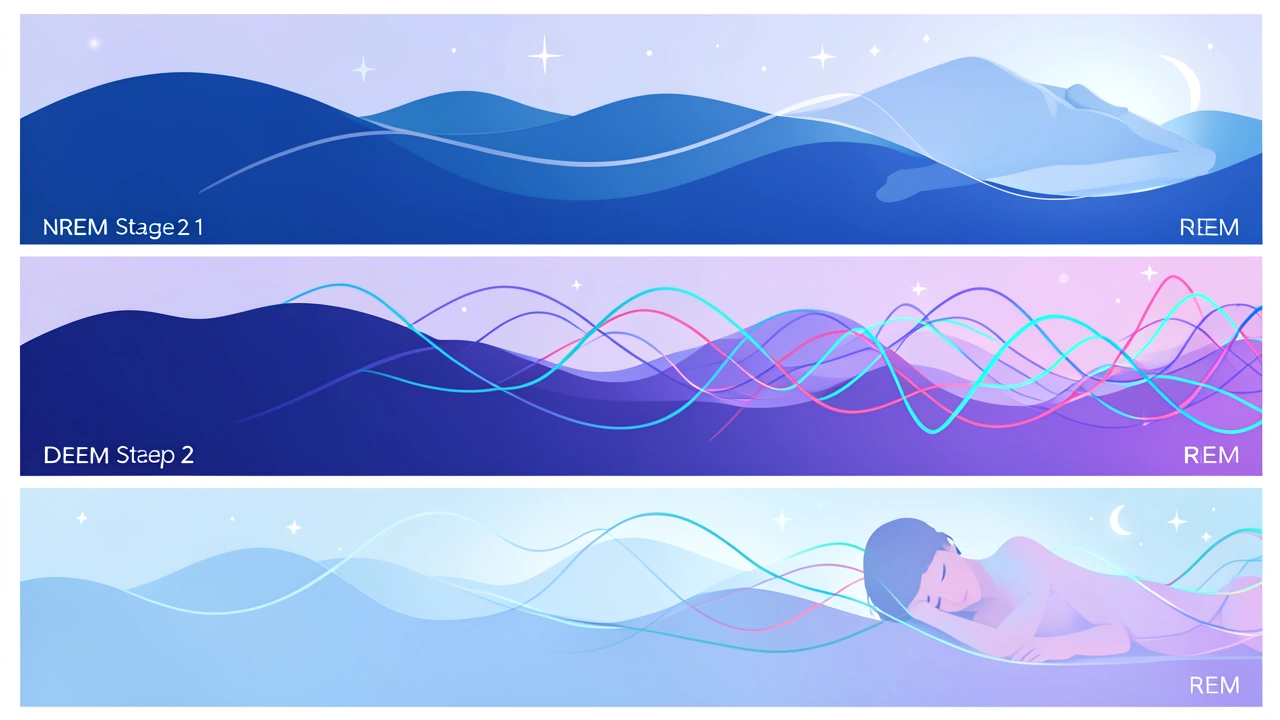
The magic of a full night’s sleep comes from how these different stages work together in cycles. Each cycle builds on the last, providing a comprehensive repair and maintenance service for your entire body and mind. It’s not just about sleeping for a long time, but sleeping in a way that allows these cycles to complete properly.
The Sleep Cycle Sequence
As we mentioned, a sleep cycle starts with light sleep, moves to deeper non-REM stages, and then to REM sleep. After REM sleep, the cycle begins again, usually starting with light non-REM sleep. This process repeats several times throughout the night.
-
The first few cycles might have longer periods of deep sleep. This is when the most intense physical restoration happens. Your body is focused on rebuilding and repairing itself.
-
As the night progresses, the REM sleep stages become longer. This shift supports increased brain activity, helping with learning and memory consolidation.
-
An average night’s sleep for an adult includes about 4-6 full sleep cycles. Each cycle is a complete journey through the stages, preparing you for the next one.
Factors Affecting Sleep Cycles
Several things can disrupt the natural flow of your sleep cycles. Age is a big factor, as sleep patterns change throughout life. Lifestyle choices, like diet and exercise, also play a significant role.
Even the environment where you sleep can make a difference.
-
As we age, the amount of deep sleep we get tends to decrease. Older adults may also experience more awakenings during the night, which can break up their sleep cycles.
-
Consuming caffeine or alcohol close to bedtime can interfere with REM sleep and increase awakenings. Regular exercise can improve sleep quality, but intense workouts too close to bed might have the opposite effect.
-
A bedroom that is too noisy, too bright, or too hot can prevent you from entering and staying in the deeper stages of sleep. A cool, dark, and quiet environment is best for healthy sleep cycles.
Real-Life Example: Impact of Shift Work
John works night shifts, which completely reverses his natural sleep-wake cycle. This means he often sleeps during the day, when his body’s internal clock is programmed for wakefulness. As a result, he struggles to achieve adequate deep sleep and REM sleep.
This often leaves him feeling tired, irritable, and having difficulty concentrating, even after sleeping for many hours. His disrupted schedule makes it hard for his body to complete its natural sleep cycles effectively.
Getting Enough of Each Stage
To feel truly rested, you need to get enough time in all sleep stages. This means aiming for a full night’s sleep, typically 7-9 hours for adults. It also means creating conditions that support healthy sleep cycles.
-
Prioritizing sleep means making it a non-negotiable part of your day. Treat it with the same importance as eating healthy or exercising.
-
Having a consistent sleep schedule, even on weekends, helps regulate your body’s internal clock. This makes it easier to fall asleep and wake up naturally, supporting your sleep cycles.
-
Creating a relaxing bedtime routine can signal to your body that it’s time to wind down. This could include reading a book, taking a warm bath, or listening to calm music.
Tips for Better Sleep Cycles
Improving your sleep cycles doesn’t require drastic changes. Small, consistent habits can make a big difference. The goal is to create an environment and routine that encourages your body to move through the sleep stages smoothly and efficiently.
Optimizing Your Sleep Environment
Your bedroom should be a sanctuary for sleep. Making a few simple adjustments can greatly enhance the quality of your rest. This means considering light, sound, and temperature.
-
Darkness: Make your room as dark as possible. Even small amounts of light can interfere with melatonin production, a hormone that helps you sleep. Use blackout curtains if necessary.
-
Quiet: Minimize noise. If you live in a noisy area, consider using earplugs or a white noise machine. Consistent, low-level sound can mask disruptive noises.
-
Temperature: A cool room is generally best for sleep. Most experts recommend a temperature between 60-67 degrees Fahrenheit (15-19 degrees Celsius).
Establishing Healthy Habits
What you do during the day significantly impacts your sleep at night. Developing good daily habits can train your body for better sleep cycles.
-
Consistent Schedule: Go to bed and wake up around the same time every day, even on days off. This helps regulate your body’s internal clock, known as the circadian rhythm.
-
Limit Naps: If you must nap, keep it short (20-30 minutes) and early in the afternoon. Long or late naps can make it harder to fall asleep at night.
-
Watch What You Eat and Drink: Avoid caffeine and alcohol close to bedtime. Heavy meals late at night can also disrupt sleep.
Statistics on Sleep and Productivity
Research shows that getting adequate sleep can significantly boost productivity. A study by the University of Pennsylvania found that individuals who were sleep-deprived performed worse on cognitive tests than those who were intoxicated with alcohol. Another report by the National Sleep Foundation indicated that 60% of adults report having sleep problems a few nights a week or more, impacting their daily function.
Mindfulness and Relaxation
Stress and anxiety are major sleep disruptors. Incorporating relaxation techniques can help calm your mind before bed, preparing you for sleep.
-
Relaxation Routine: Develop a calming routine before bed. This could involve reading, gentle stretching, or listening to calming music. Avoid stimulating activities like work or intense media consumption.
-
Deep Breathing: Practice deep breathing exercises to slow your heart rate and calm your nervous system. Inhale slowly through your nose, hold for a moment, and exhale slowly through your mouth.
-
Journaling: If your mind races with worries, try writing them down before bed. This can help you get them out of your head and onto paper, reducing rumination.
Frequently Asked Questions
Question: What is the main difference between REM and deep sleep?
Answer: Deep sleep is primarily for physical repair and restoration of the body, with slow brain waves. REM sleep is for brain activity, memory consolidation, and emotional processing, with rapid eye movements and vivid dreaming.
Question: How many sleep cycles do most people go through each night?
Answer: Most adults go through about 4 to 6 sleep cycles per night. Each cycle typically lasts between 90 and 110 minutes.
Question: Can I tell if I’m getting enough deep sleep or REM sleep?
Answer: While it’s hard to tell precisely without sleep tracking devices, feeling groggy, having poor concentration, or experiencing mood swings can be signs of insufficient deep or REM sleep.
Question: Why do sleep cycles change throughout the night?
Answer: Early in the night, deep sleep stages are longer and more frequent. As the night progresses, REM sleep stages get longer, supporting brain functions and memory consolidation.
Question: Is it possible to “catch up” on lost sleep cycles?
Answer: While you can gain some benefits from sleeping longer after a night of poor sleep, it’s difficult to fully compensate for lost deep or REM sleep. Consistent sleep patterns are more effective.
Conclusion
Understanding Sleep Cycles Explained: REM vs Deep Sleep shows how each stage works. Deep sleep fixes your body. REM sleep sharpens your mind.
Together, they create a full night of rest. Aim for consistent sleep. Make your bedroom dark and quiet.
Simple steps help you get the restorative sleep you need.
Leave a Reply