

Many people focus on what they eat and how much they move, thinking that’s the best way to be healthy. But what if something else is even more important? It’s often hard for beginners to grasp Why Sleep Is More Important Than Diet & Exercise because sleep feels passive.
We don’t ‘do’ sleep like we do eating or working out. But this quiet time is when our body does its most important healing and building. Don’t worry, we’ll break it down super simply, step by step.
Get ready to learn about the hidden power of sleep.
The Foundation of Health: Understanding Sleep’s Role
Sleep is the body’s natural time to repair, recharge, and reset. Think of it like shutting down your computer at night so it can run smoothly the next day. Without enough quality sleep, your body can’t perform these vital tasks.
This affects everything from how you think to how your body fights off sickness. Many people underestimate sleep because its effects aren’t as immediate as a good workout’s boost or a healthy meal’s fullness. But its long-term impact is profound.
Why Sleep Outshines Other Health Pillars
While diet and exercise are super important for a healthy life, sleep plays a unique and foundational role. You can eat the healthiest foods and exercise daily, but if you’re not sleeping well, you’re still at a disadvantage. Sleep is when your brain consolidates memories, your muscles repair themselves, and your hormones regulate.
When these processes are interrupted by lack of sleep, the benefits of diet and exercise can be significantly reduced. It’s like trying to build a strong house on a weak foundation.
Consider this: when you’re sleep-deprived, your body releases more cortisol, the stress hormone. High cortisol levels can lead to increased appetite, cravings for unhealthy foods, and the storage of fat, especially around your belly. This directly undermines the benefits of a healthy diet.
Furthermore, lack of sleep impairs muscle recovery and can decrease your motivation to exercise. You might feel too tired to hit the gym or have a less effective workout, negating the gains you’re working towards.
- Brain Function and Cognitive Performance: Sleep is critical for clear thinking, memory, and learning. During sleep, your brain processes information from the day and stores memories. Without enough sleep, you might find it hard to concentrate, make decisions, or remember things. This affects your work, studies, and daily life.
When you sleep, your brain is busy. It’s like a librarian organizing books. Different sleep stages help sort and store information.
Deep sleep is particularly important for making memories solid. REM sleep helps with problem-solving and creativity. If you don’t get enough of these stages, your brain can’t do its job well.
This means you might feel foggy, forgetful, and less able to learn new things. A good night’s sleep can make you sharper and more efficient.
- Emotional Regulation and Mood Stability: Getting enough sleep helps you manage stress and maintain a positive mood. When you’re tired, you’re more likely to feel irritable, anxious, or down. Consistent good sleep makes you more resilient to daily stressors and keeps your emotions balanced.
Think about how you feel after a bad night’s sleep. Small things might bother you more, and you might feel overwhelmed easily. This is because sleep helps regulate the parts of your brain that control emotions.
When sleep is lacking, these systems get out of whack. You might snap at people or feel sad for no clear reason. Getting enough rest helps you feel calmer, happier, and more in control of your feelings throughout the day.
- Physical Health and Disease Prevention: Sleep is vital for your immune system, hormone balance, and overall physical repair. Chronic sleep deprivation is linked to serious health problems like heart disease, diabetes, and obesity. It weakens your body’s defenses and makes you more prone to illness.
Your body does a lot of repair work while you sleep. Your immune system produces protective proteins called cytokines, some of which help you fight infection and inflammation. If you don’t sleep enough, your body produces fewer of these.
This makes you more likely to get sick when exposed to viruses. Also, sleep helps keep your blood sugar and blood pressure in check. Long-term lack of sleep can increase your risk of developing chronic conditions over time.
How Sleep Fuels Recovery and Growth
Sleep is when your body actively works to repair itself from the day’s activities. This is especially true for muscles after exercise. During deep sleep, your body releases growth hormone, which is essential for muscle repair and building.
Without adequate sleep, this process is significantly hampered, meaning your workouts might not lead to the gains you expect.
This recovery isn’t just for athletes. Everyday wear and tear on your body also needs sleep to be fixed. Think of it as your body’s overnight maintenance crew.
They patch up small tears, rebuild tissues, and clear out waste products that build up during the day. If the crew doesn’t get enough time on the job, problems can start to pile up, leading to fatigue and pain.
Muscle Repair and Tissue Regeneration
During sleep, your body releases important proteins that help build and repair muscles. This process is super key for anyone who is physically active, but it’s also important for general body maintenance. Without enough deep sleep, your muscles won’t recover as well from exercise or daily strain.
This is where growth hormone comes in. It’s most active during deep sleep. It helps in the repair of cells and tissues.
For athletes, this means better muscle growth and faster recovery. For everyone else, it means your body can heal from minor injuries and stay strong and healthy.
A study published in the Journal of the American Medical Association found that sleep deprivation can negatively impact muscle protein synthesis, which is the process of building new muscle tissue. This means that even with consistent training and a good diet, muscle growth can be stalled if sleep is insufficient. It highlights that sleep is not a passive bystander but an active participant in physical adaptation.
Hormone Regulation and Balance
Sleep plays a huge role in keeping your hormones in balance. Hormones control many of your body’s functions, from hunger and metabolism to stress response and growth. When you don’t sleep enough, your hormone levels can get out of whack, leading to various health issues.
For example, sleep loss affects two key hormones that control appetite: ghrelin and leptin. Ghrelin tells you when you’re hungry, and leptin tells you when you’re full. When you’re sleep-deprived, ghrelin levels go up, making you feel hungrier.
Leptin levels go down, so you don’t feel as satisfied after eating. This hormonal imbalance can lead to overeating and weight gain, even if you’re trying to eat healthy.
Another critical hormone regulated by sleep is cortisol. This is your body’s main stress hormone. When you don’t get enough sleep, your body produces more cortisol.
High cortisol levels over time can lead to increased belly fat, weakened immunity, and a higher risk of heart disease. So, getting good sleep is a powerful way to manage stress naturally.
The Hidden Costs of Sleep Deprivation
Skipping sleep might seem like a way to get more done, but it comes with significant hidden costs to your health and well-being. These costs can affect your physical health, mental sharpness, and even your safety.
It’s not just about feeling tired. Chronic lack of sleep can lead to serious long-term health problems. Your body’s ability to heal and protect itself is greatly reduced, making you more vulnerable to illness and injury.
Impact on Immune System Function
Your immune system is your body’s defense against germs and infections. Sleep is like a crucial support system for your immune cells. When you sleep well, your immune system is stronger and better able to fight off sickness.
If you’re not getting enough sleep, your immune system weakens.
This means you’re more likely to catch colds, the flu, or other infections. It also means that when you do get sick, it might take longer to recover. Studies have shown that people who sleep less are more susceptible to viruses.
For instance, a study found that individuals sleeping less than 7 hours a night were nearly three times more likely to develop a cold than those sleeping 8 hours or more.
Furthermore, sleep is vital for the effectiveness of vaccines. If you haven’t had enough sleep before getting a vaccine, your body might not produce as strong an immune response, meaning the vaccine might not protect you as well. This shows how directly sleep impacts our ability to stay healthy.
Increased Risk of Chronic Diseases
Consistently not getting enough sleep is a major risk factor for several serious long-term health problems. These are diseases that develop over time and can significantly impact your quality of life.
One of the most significant links is to type 2 diabetes. Sleep deprivation can affect how your body uses insulin, the hormone that controls blood sugar. Over time, this can lead to insulin resistance, a precursor to diabetes.
Poor sleep also impacts hormones that regulate appetite, leading to weight gain, which is another major risk factor for diabetes.
Heart disease is another concern. Lack of sleep can lead to higher blood pressure and increased inflammation, both of which are hard on your cardiovascular system. Over years, this damage can increase your chances of heart attack or stroke.
It’s a clear reminder that sleep is not a luxury but a necessity for a healthy heart.
Impaired Mental Health and Emotional Well-being
The connection between sleep and mental health is undeniable. Poor sleep can significantly worsen conditions like anxiety and depression, and can even contribute to their development.
When you’re tired, your ability to cope with stress is reduced. Small problems can feel like huge challenges. This constant feeling of being overwhelmed can feed into anxiety.
Similarly, sleep disruption affects neurotransmitters in the brain, like serotonin, which plays a key role in mood regulation. Low serotonin levels are often seen in people with depression.
It’s often a vicious cycle: poor mental health can disrupt sleep, and poor sleep can worsen mental health. Breaking this cycle often starts with prioritizing good sleep habits. A study indicated that individuals with insomnia were five times more likely to develop depression.
This shows the strong, direct link between sleep quality and emotional balance.
Maximizing Your Sleep for Optimal Health
Now that we see how important sleep is, let’s talk about how to actually get more of it. It’s not about having a perfect routine overnight, but making small, consistent changes. We’ll look at how to create a sleep-friendly environment and helpful habits.
Think of building good sleep habits like building any other healthy habit. It takes practice and patience. The goal is to signal to your body that it’s time to wind down and prepare for rest.
Creating a Sleep-Inducing Environment
Your bedroom should be a sanctuary for sleep. Making it dark, quiet, and cool can make a big difference in how well you sleep. Small changes to your room can have a large impact on your sleep quality.
Darkness is key because it signals to your brain that it’s nighttime. Even small amounts of light from electronics or streetlights can disrupt your body’s natural sleep-wake cycle, known as your circadian rhythm. Using blackout curtains or an eye mask can help make your room darker.
Keeping your bedroom quiet is also important. Any sudden noises can wake you up or prevent you from falling into deep sleep. Using earplugs or a white noise machine can help mask disruptive sounds.
The ideal temperature for sleep is generally between 60-67 degrees Fahrenheit (15-19 degrees Celsius). A cooler room helps your body temperature drop, which is a natural part of the sleep process.
The Power of Darkness
Light has a powerful effect on our bodies’ internal clocks. When it’s dark, your brain releases melatonin, a hormone that makes you feel sleepy. If there’s too much light in your bedroom, it can trick your brain into thinking it’s still daytime, making it harder to fall asleep and stay asleep.
This is why it’s important to make your bedroom as dark as possible. Even the small lights on electronic devices can be disruptive. Consider covering them with tape or unplugging them if they aren’t in use.
Blackout curtains are a great investment for keeping out streetlights or early morning sun. An eye mask can also be very effective if you can’t make your room completely dark.
Finding the Right Temperature and Sound
Most people sleep best in a cool room. Your body temperature naturally drops as you prepare to sleep, and a cool environment helps this process along. A temperature between 60 and 67 degrees Fahrenheit (15-19 degrees Celsius) is often recommended.
Experiment to find what feels most comfortable for you. Some people sleep better with a fan on, which can also provide a consistent, soothing sound. White noise machines or even an app that plays gentle sounds can help block out sudden, jarring noises that might otherwise wake you up.
A consistent, low-level sound can create a more peaceful sleep environment.
Developing Healthy Sleep Habits (Sleep Hygiene)
Good sleep habits, often called sleep hygiene, are simple actions you can take consistently to help you sleep better. These habits help train your body to recognize when it’s time to wind down and prepare for rest.
One of the most important habits is to go to bed and wake up around the same time every day, even on weekends. This helps regulate your body’s natural sleep-wake cycle. It may sound tough, but consistency is your friend when it comes to sleep.
Also, be mindful of what you consume before bed. Caffeine and heavy meals close to bedtime can interfere with sleep. Creating a relaxing pre-sleep routine is another powerful tool to signal your body that it’s time to transition to sleep.
Consistent Sleep Schedule
Your body thrives on routine, and this is especially true for sleep. Going to bed and waking up at roughly the same time every single day helps to set your body’s internal clock, or circadian rhythm. This makes it easier to fall asleep at night and wake up feeling refreshed.
Even on days off, try to stick as closely as possible to your usual sleep schedule. While it might be tempting to sleep in for hours on a Saturday, doing so can throw off your rhythm for the rest of the week, making it harder to fall asleep on Sunday night. A consistent schedule helps your body anticipate sleep and wakefulness naturally.
Winding Down Before Bed
Your brain needs time to switch gears from the activity of the day to the quiet of sleep. Creating a relaxing bedtime routine signals to your body and mind that it’s time to wind down. This routine can be anything that you find calming and enjoyable.
Examples include taking a warm bath, reading a physical book (not on a screen), listening to calm music, or doing some gentle stretching or meditation. The key is to avoid stimulating activities, like watching exciting TV shows, engaging in stressful conversations, or working on your laptop right before you plan to sleep. Aim for about 30-60 minutes of winding down time.
The Role of Diet and Exercise in Sleep
While we’ve discussed why sleep is more important, diet and exercise still play a role in how well you sleep. They aren’t the main event, but they are important supporting actors.
What you eat and when you eat can affect your sleep. Similarly, when and how intensely you exercise can impact your ability to drift off peacefully.
What and When to Eat for Better Sleep
Your diet can either help or hinder your sleep. Certain foods and drinks can make it harder to fall asleep, while others might promote relaxation.
Avoid heavy meals, caffeine, and alcohol close to bedtime. Caffeine is a stimulant that can keep you awake for hours. Alcohol might make you feel drowsy initially, but it disrupts sleep later in the night, leading to more awakenings and less restful sleep.
Try to finish eating your last big meal at least two to three hours before you plan to go to bed. If you’re hungry before bed, opt for a light, sleep-promoting snack like a banana or a small handful of almonds.
Some nutrients are also linked to better sleep. Magnesium, found in leafy greens, nuts, and seeds, can help relax muscles and calm the nervous system. Tryptophan, an amino acid found in dairy products and turkey, is a precursor to serotonin and melatonin, which are crucial for sleep.
Timing and Intensity of Exercise
Regular exercise is great for overall health and can definitely improve sleep quality. However, the timing and intensity of your workouts matter.
For most people, exercising earlier in the day or in the afternoon is best for sleep. Intense workouts too close to bedtime can be too stimulating and make it harder to fall asleep. If you do need to exercise in the evening, try to finish your workout at least two to three hours before you plan to go to bed.
Gentle activities like stretching or yoga can be fine closer to bedtime as they can be relaxing.
The key is to find a balance. Consistent physical activity can help you fall asleep faster and experience deeper sleep. Just be mindful of when you do it to avoid disrupting your sleep cycle.
Case Studies and Real-Life Examples
Seeing how sleep impacts real people can make its importance much clearer. These examples show the tangible benefits of prioritizing sleep.
Let’s look at a few scenarios where improving sleep made a big difference.
Sarah’s Story: From Exhausted to Energized
Sarah was a busy marketing manager who always felt tired. She often worked late and would scroll through her phone in bed until the early hours. She ate well most of the time and went to the gym three times a week, but she still felt drained and unmotivated.
She’d often catch colds and struggled to focus during important meetings.
- Sarah decided to try improving her sleep. She set a strict bedtime, aiming to be asleep by 11 PM and wake up at 7 AM.
- She made her bedroom completely dark by using blackout curtains and turned off all electronics an hour before bed.
- Instead of scrolling, she started reading a book for 30 minutes before sleeping.
Within two weeks, Sarah noticed a significant change. She felt more alert during the day, her motivation to exercise increased, and she started to feel more resilient to stress. She even found herself less prone to getting sick.
Her productivity at work improved, and she felt generally happier.
Mark’s Challenge: Sleep and Weight Management
Mark was struggling to lose weight despite following a strict diet and exercising regularly. He was often hungry, especially in the evenings, and found himself reaching for unhealthy snacks. He also felt perpetually tired, making his workouts feel like a chore.
After a consultation with a nutritionist, Mark learned about the impact of sleep on appetite-regulating hormones. He committed to improving his sleep hygiene:
- He started going to bed at the same time each night, aiming for 7-8 hours of sleep.
- He avoided caffeine after 2 PM and had his last meal at least three hours before bedtime.
- He found that by getting enough sleep, his cravings for sugary snacks decreased significantly, and he felt more satisfied after meals.
As a result, Mark found it easier to stick to his diet. He also felt more energized for his workouts, leading to better results. His weight loss efforts became much more effective once he prioritized sleep.
The Student Success: Academic Performance and Sleep
A group of college students participating in a study were divided into two groups. One group maintained their regular sleep habits, while the other group was coached to improve their sleep hygiene, aiming for 7-9 hours of quality sleep per night.
The group that improved their sleep showed significant improvements in their academic performance. They reported better concentration in class, improved memory recall during exams, and higher overall grades compared to the control group. This demonstrates that sufficient sleep is not just about feeling good, but also about performing at your best academically.
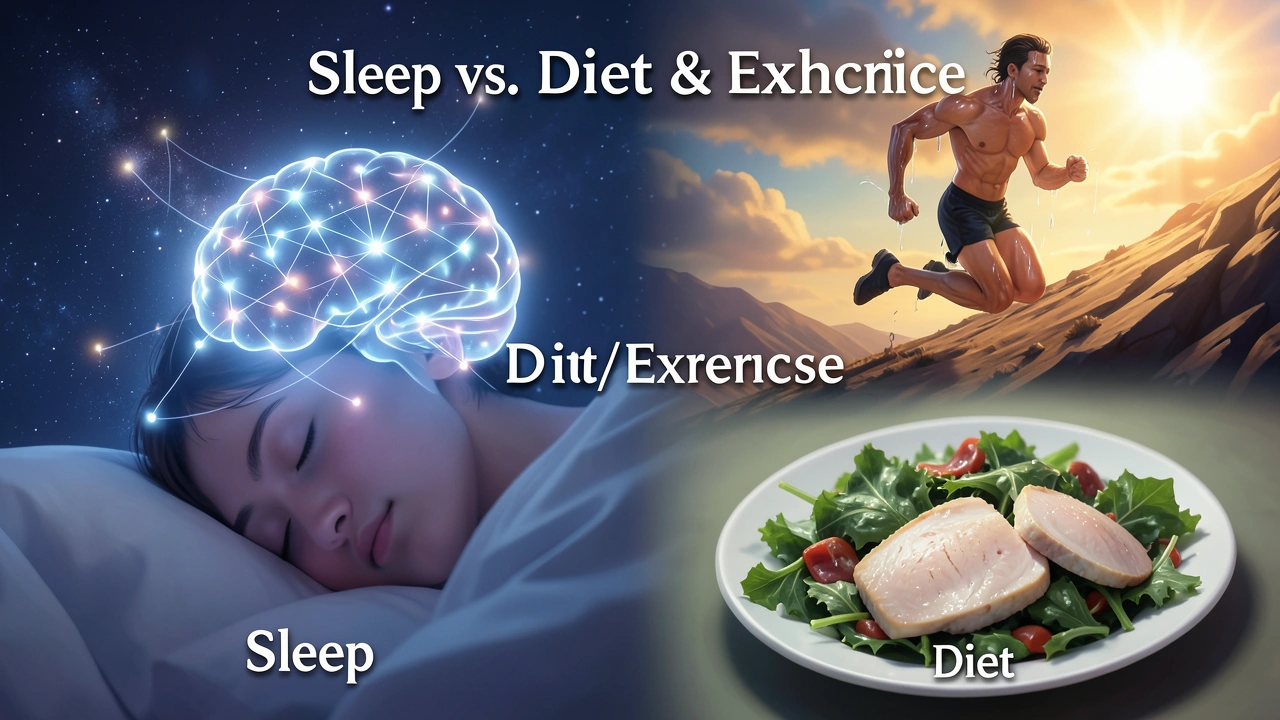
Comparing Sleep with Diet and Exercise
It’s helpful to see how sleep stacks up against diet and exercise in terms of its impact. While all three are essential, sleep often acts as the bedrock upon which the benefits of the other two are built.
Imagine building a house. Diet and exercise are like the walls and the roof – they provide structure and protection. But sleep is the foundation.
If the foundation is weak, the walls and roof won’t stand up as well, no matter how well-built they are.
| Aspect | Impact on Health | Primary Function | When Neglected |
|---|---|---|---|
| Sleep | Essential for brain function, mood, immune system, hormone balance, physical repair. | Restoration, repair, consolidation. | Cognitive impairment, weakened immunity, hormonal imbalance, increased risk of chronic disease. |
| Diet | Provides nutrients for energy, growth, and body functions. | Fueling and building. | Nutrient deficiencies, weight problems, low energy, increased risk of disease. |
| Exercise | Improves cardiovascular health, muscle strength, mood, and metabolism. | Strengthening and conditioning. | Poor physical fitness, weight gain, increased risk of chronic disease, poor mood. |
As the table shows, sleep’s impact is very broad and touches on almost every system in the body. While good diet and exercise offer many benefits, their effectiveness can be greatly reduced without adequate sleep. For instance, your body cannot build muscle efficiently without sleep, even if you are eating enough protein and exercising intensely.
Consider a scenario where someone is trying to lose weight. They can stick to a perfect diet and exercise plan, but if they are only sleeping 5 hours a night, their body’s stress hormones will be elevated, their appetite hormones will be out of balance, and they will likely store more fat and crave unhealthy foods. The diet and exercise efforts are working against the body’s internal state caused by sleep deprivation.
The Synergistic Effect
It’s important to remember that these three pillars of health – sleep, diet, and exercise – don’t work in isolation. They work together. When you get enough quality sleep, you tend to have more energy for exercise and make healthier food choices.
When you eat well and exercise, you often sleep better.
This synergistic effect means that improving one area can positively influence the others. For example, if you start getting an extra hour of sleep each night, you might find yourself naturally wanting to eat more nutritious foods and having the energy to go for a brisk walk. This creates a positive feedback loop that enhances overall well-being.
However, the foundational nature of sleep means that without it, the benefits of diet and exercise are significantly diminished. You can’t truly optimize your health by focusing solely on food and fitness if your sleep is consistently poor. It’s like trying to drive a car with one tire constantly deflated – you won’t get very far, no matter how good the engine is.
Frequently Asked Questions
Question: Is it really possible that sleep is more important than exercise?
Answer: Yes, in many ways. While exercise is vital for physical health, sleep is fundamental for your body’s repair, hormone balance, and cognitive function. Without good sleep, the benefits of exercise are reduced, and your body may not recover properly.
Question: How much sleep do I actually need?
Answer: Most adults need between 7 to 9 hours of sleep per night. However, this can vary slightly from person to person. The best way to tell is to notice how you feel during the day – if you’re consistently tired, you likely need more sleep.
Question: Can I “catch up” on sleep on the weekends?
Answer: While sleeping in on weekends can help reduce some of the sleep debt, it’s not a perfect substitute for consistent sleep every night. It’s better to aim for a regular sleep schedule throughout the week.
Question: Does diet or exercise affect my sleep quality?
Answer: Yes, they do. Eating heavy meals or consuming caffeine close to bedtime can disrupt sleep. Similarly, intense exercise too close to bedtime can make it harder to fall asleep.
However, regular exercise and a balanced diet generally promote better sleep.
Question: What happens if I consistently don’t get enough sleep?
Answer: Consistent lack of sleep can lead to many health problems, including a weakened immune system, increased risk of chronic diseases like diabetes and heart disease, mood disturbances, poor concentration, and weight gain.
Summary
Prioritizing sleep is key for overall health. It’s the time your body performs crucial repair and regulation. Good sleep boosts your immune system, balances hormones, and sharpens your mind.
Making small changes to your sleep environment and habits can lead to big improvements. Remember that sleep is the foundation that supports the benefits of diet and exercise. Focus on getting quality rest, and you’ll feel the difference.
Leave a Reply